THE NAMES HELEN AND CONSTANTINE may not be names one hears on a daily basis - unless, maybe, if you're in certain parts of the world, such as Greece, where both are revered. But I do guarantee you feel their impact on history and the world even today.
Churches all around the world recite the "Nicene Creed" every day, which was derived from a meeting of bishops assembled by the Emperor Constantine.
You may be most familiar with Helen because of the famous volcano in Washington. But did you know she founded the Church of the Holy Sepulcher in Israel to mark the sites where Christ died and was resurrected? Countless millions of pilgrims have visited this incredibly sacred site for 1,700 years. It has been built, destroyed, and rebuilt time and time again.
The legend goes that when Helen, along with Bishop Macarius of Jerusalem, dug up three crosses, they did not know which could have been Christ's. So they asked a local woman who was deathly sick to touch each of them. When she did, nothing happened to her upon touching the first two. On the third one, however, she was healed instantly.
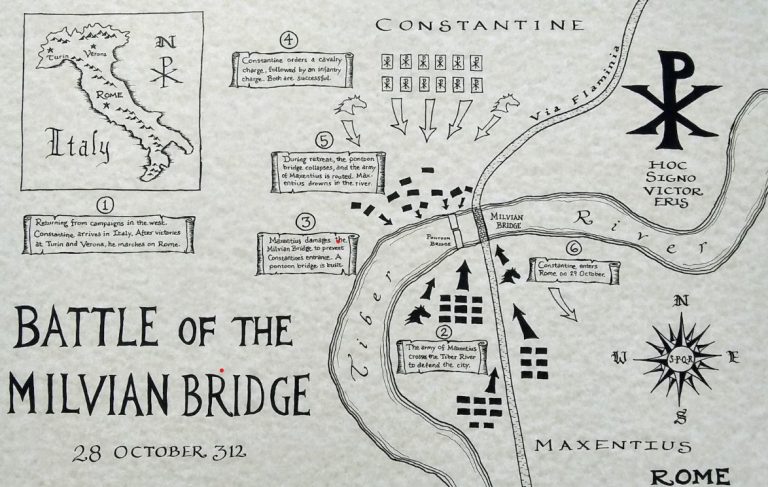
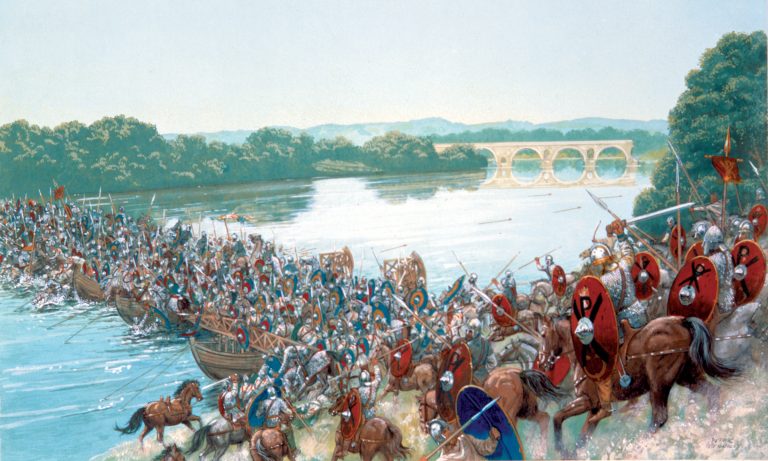
Constantine, along with his father, ended the persecution of Christians across the Roman Empire and allowed subjects everywhere to freely practice their Christian faith. Leading up to that point, he had to take on other self-declared Roman Empires and win the "Battle of Milvian Bridge" in 312 AD. During that battle, a great sign appeared in the sky... the Cross, the Chi-Ro Symbol with the message, "In this sign, you shall conquer."
The History
Truth be told, there are many historical gaps about the life of St. Helen. We simply don't know much about her life. We do have historians who've written in the same century about Helen and Constantine, but most of those focus primarily on Constantine. However, many historians agree Helen was born in Drepanum, Turkey; renamed Helenopolis by her son. Some considered her to be a humble innkeeper's daughter prior to her marriage with Roman officer Constantius. Other accounts suggest she was born in Britain. For the novel "The Living Wood", Louis de Wohl chose the latter.
Louis de Wohl said this about their history:
THESE DATES ARE historically correct.
Only the time of Book One, which is more or less a prologue to the others is doubtful. We do not know for sure exactly in what year Constantius and Helena met, fell in love and married. I made it coincide with the fall of Palmyra, which was in 272.
274 is the correct historical date for the birth of Constantine;
289 for the acknowledgment of the Carausian regime by Rome;
294 for the assassination of Carausius;
296 for the liberation of Britain;
303 for the famous Edict of Diocletian and Maximian against the Christians;
306 for the death of Constantius (July 25);
312 for Constantine's campaign against Maxentius and the battle at the Milvian bridge (October 28);
326 for the death of Crispus and the finding of the True Cross (May 3).
This is a novel and does not claim to be accredited history in all points. Where historians are at loggerheads with each other—as for instance about the birthplace of St. Helena, and her original rank in society—I was free to choose the version I preferred. But most of the events of the book are based upon historical fact, and so are most of the personages in it—even down to the Centurion Marcus Favonius Facilis, of whom a bronze statue is still extant in Britain. There follows a list of the Roman cities most frequently referred to and least easily identifiable in their Latin forms, with their English equivalents:
Camulodunum—Colchester
Eburacum—York
Aquae Sulis—Bath
Verulamium—near St. Albans
Gessoriacum—Boulogne
First and Second-Hand Historians documenting Constantine and Helen:
Eusebius of Caesarea (260–339 AD)
"Life of Constantine"
Lactantius (250 - 325 AD)
"On the Death of Persecutors"
Socrates (380 - 439 AD) and
Sozomen (400 - 450 AD)
"The Ecclesiastical History of Socrates Scholasticus"
Theodoret of Cyrrhus (393 - 466 AD)
"Ecclesiastical history : a history of the church in five books from A.D. 322 to the death of Theodore of Mopsuestia A.D. 427"